
How do I adjust my uPVC doors?Updated 7 months ago
Over time, uPVC doors can naturally drop or become slightly misaligned due to regular use and seasonal expansion. Our uPVC doors feature adjustable hinges, allowing you to fine-tune the door’s height, lateral position and compression to ensure a smooth close and a secure seal.
Our step-by-step guide explains how to safely adjust your hinges using standard tools, helping you correct common issues such as catching, gaps or difficulty locking.
You can download the full PDF guide using the above link for detailed instructions or reading through the below.
uPVC Door Adjustment Guide for Log Cabins
Timber is a natural material and will move over time as it responds to changes in temperature and moisture. As a log cabin settles, expands, or contracts, this movement can affect openings such as doors and windows.
uPVC frames are far more dimensionally stable than timber, but they can still experience minor thermal expansion and contraction. Because uPVC doors and windows are fixed into a timber structure, any movement in the cabin itself is usually more noticeable at these rigid openings, which can cause doors or windows to appear out of square.
This guide provides a clear, step-by-step process to diagnose the cause and correctly realign the doors if required.
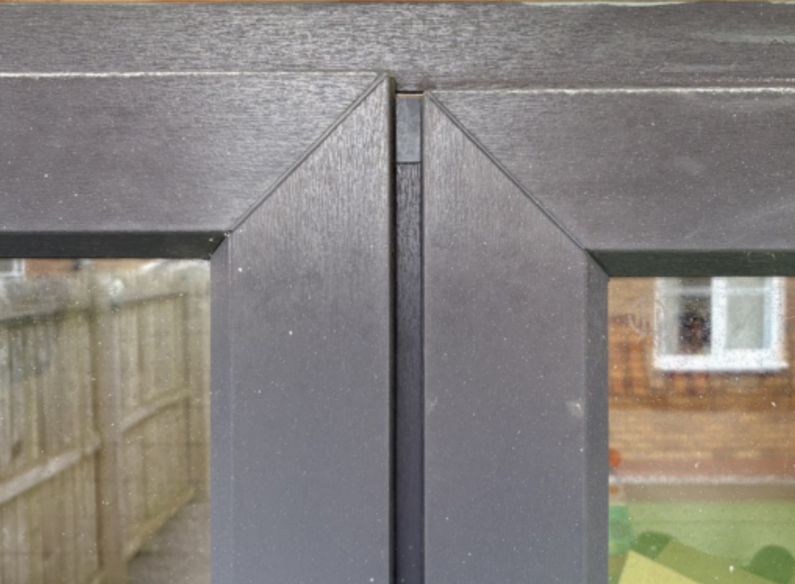
Important First Point - How the Doors Are Supplied
All uPVC doors are pre-fitted into the frame at the factory. Before dispatch, each door set is:
- Squared within the frame;
- Heeled and toed;
- Checked for correct operation.
What does heeled and toed mean?
Heeling and toeing is a glazing technique used to keep doors square and prevent them from dropping over time.
- Small glazing packers are placed diagonally inside the door sash;
- These transfer the weight of the glass to the hinge side of the frame;
- This ensures the door remains square, level, and properly supported.
Because of this process, the doors leave us square and correctly aligned. If the doors appear out of square once installed, it almost always indicates an issue with the base or cabin construction, rather than the doors themselves.
Why Base and Build Accuracy Matters
Even a small discrepancy in the base can have a noticeable impact on door alignment.
For example:
- A difference of just 2-5mm across the base can twist the cabin structure;
- This twist transfers directly into the door opening;
- The result is doors that appear to drop, bind, or show uneven gaps.
uPVC doors are rigid and manufactured square. Timber cabins, however, will reflect any inaccuracies in the base or wall alignment.
Step 1 – Check the Cabin Walls and Door Frame
Before adjusting hinges, always confirm the structure is correct.
Check walls are vertical (plumb)
- Use a spirit level on both sides of the door opening;
- Check internally and externally;
- Ensure walls have not leaned in or out.
Check the door frame is square
- Measure diagonally from top left to bottom right of the frame;
- Measure from top right to bottom left;
- If both measurements are the same, the frame is square.
If these measurements differ, the door frame needs adjusting.
Step 2 – Squaring the Door Frame (Most Common Fix)
If the frame is not square, this is the primary method for resolving door alignment issues.
How to adjust the door frame
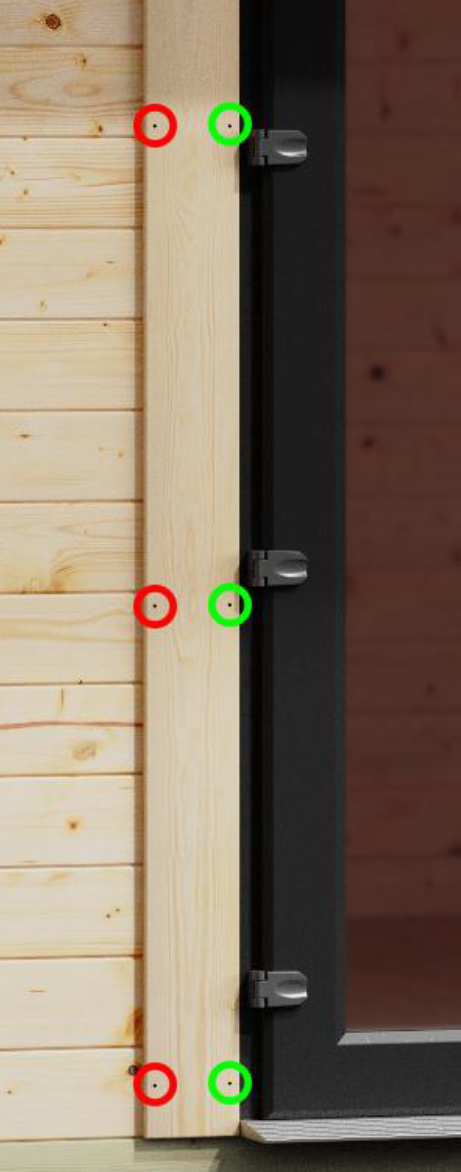
- Locate the fascia boards around the door internally and externally
- Carefully remove or loosen only the OUTERfascia screws
- ⚠️ Do not remove the inner screws;
- Removing inner screws may cause the door frame to fall out;
- Once the outer screws are loosened, the frame can be gently adjusted.
Why this works
Behind the fascias, there is a small tolerance gap around the door frame. This gap is intentionally designed to:
- Allow for natural timber expansion and contraction;
- Enable minor adjustment during installation;
- Allow the frame to be squared if the cabin settles.
Best practice
- Temporarily remove the doors from the frame before adjusting;
- Square the frame using diagonal measurements;
- Once square, re-secure the outer fascia screws;
- Refit the doors.
This step resolves the majority of door alignment issues.
Step 3 – Additional Checks
Base level
- Run a spirit level across the full width of the base
- Check across the door threshold specifically;
- Even a few millimetres of variation can affect door operation.
Walls plumb (final confirmation)
- Re-check vertical walls after frame adjustment;
- Ensure nothing has shifted during installation.
Log gapping
Log cabins naturally settle and logs can sometimes open small gaps as they dry and move. This can place stress on door and window openings and cause frames to move out of square.
- Check for visible gaps between logs around door and window openings;
- If log gapping is present, remove the outer screws only on all window and door fascias, both internally and externally, to allow the structure to relax;
- Loosen storm braces slightly if fitted, ensuring they are not restricting natural movement;
- Check for any internal or external fixtures or fittings that may be tying logs together and preventing normal settlement.
Once the cabin has been allowed to settle correctly, the frames can then be re-squared and fascias re-secured
Step 4 – Final Fine Tuning: Hinge Adjustment
Once the base, walls, and frame are confirmed correct, any remaining minor alignment issues can usually be resolved with hinge adjustment.
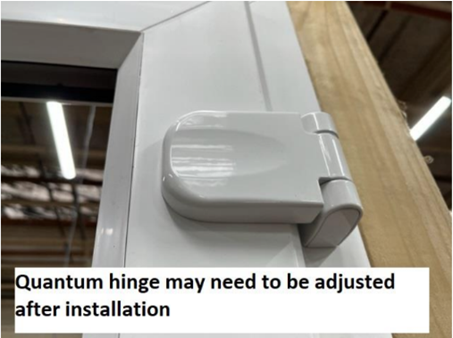
Quantum Hinge – On Site Adjustment
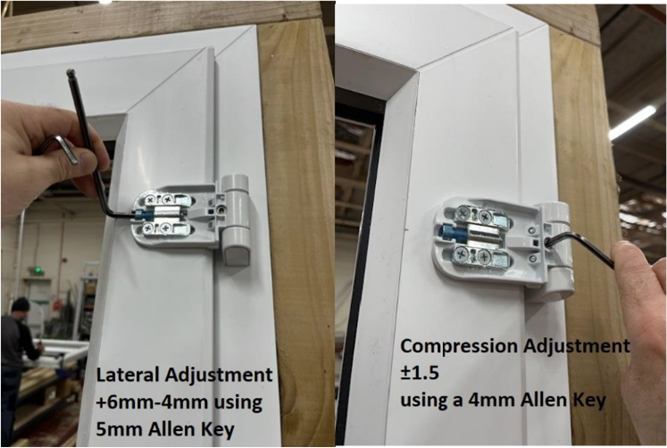
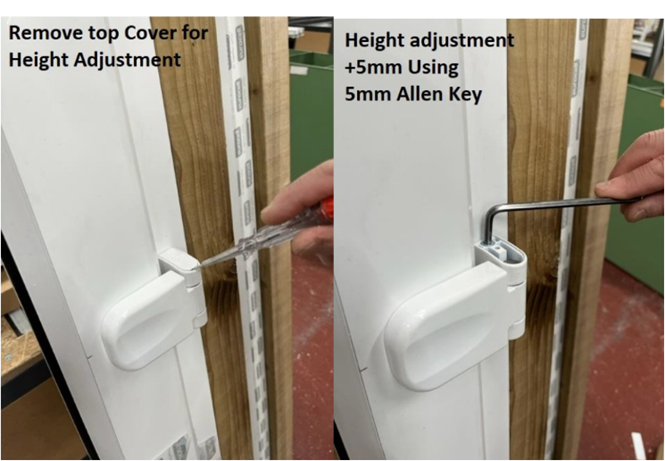
The Quantum hinge system is fully 3D adjustable, allowing adjustment:
- Side to side (lateral)
- In and out (compression)
- Up and down
Adjustments can be carried out during or after installation.
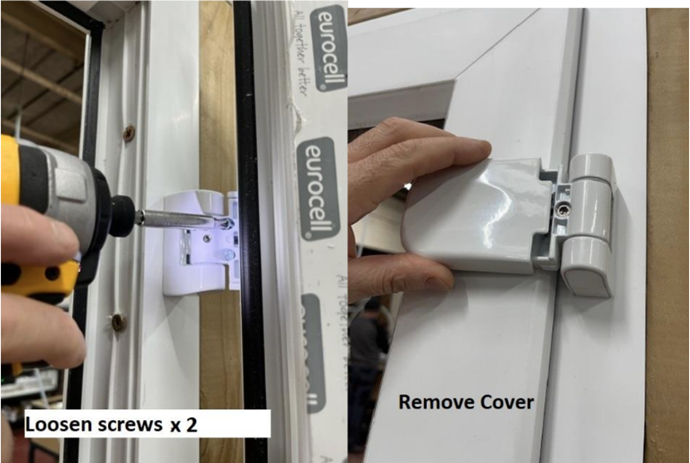
Removing the Door Sash (If Required)
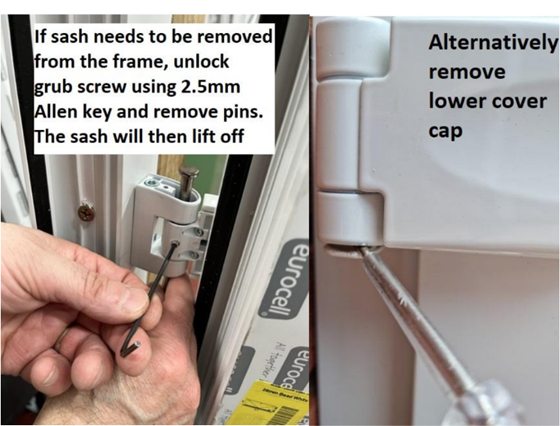
If the sash needs to be removed from the frame:
- Remove the top and bottom cover caps from the hinges;
- Unlock the grub screw using a 2.5mm Allen key;
- Remove the hinge pins;
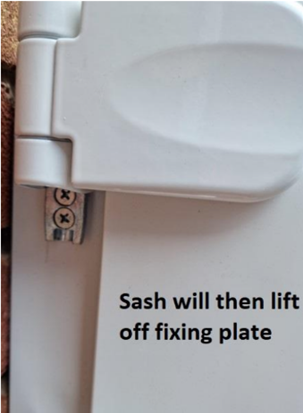
- The sash (door leaf) can then be lifted away from the frame body.
This makes frame adjustment easier and safer.
Summary
- Doors are factory-fitted, squared, and heeled and toed;
- Doors being out of square almost always indicates a base or build issue;
- Squaring the door frame behind the fascias is the most effective fix;
- Hinge adjustment is the final fine-tuning step.
Following this sequence will resolve the vast majority of uPVC door alignment issues in log cabins.